


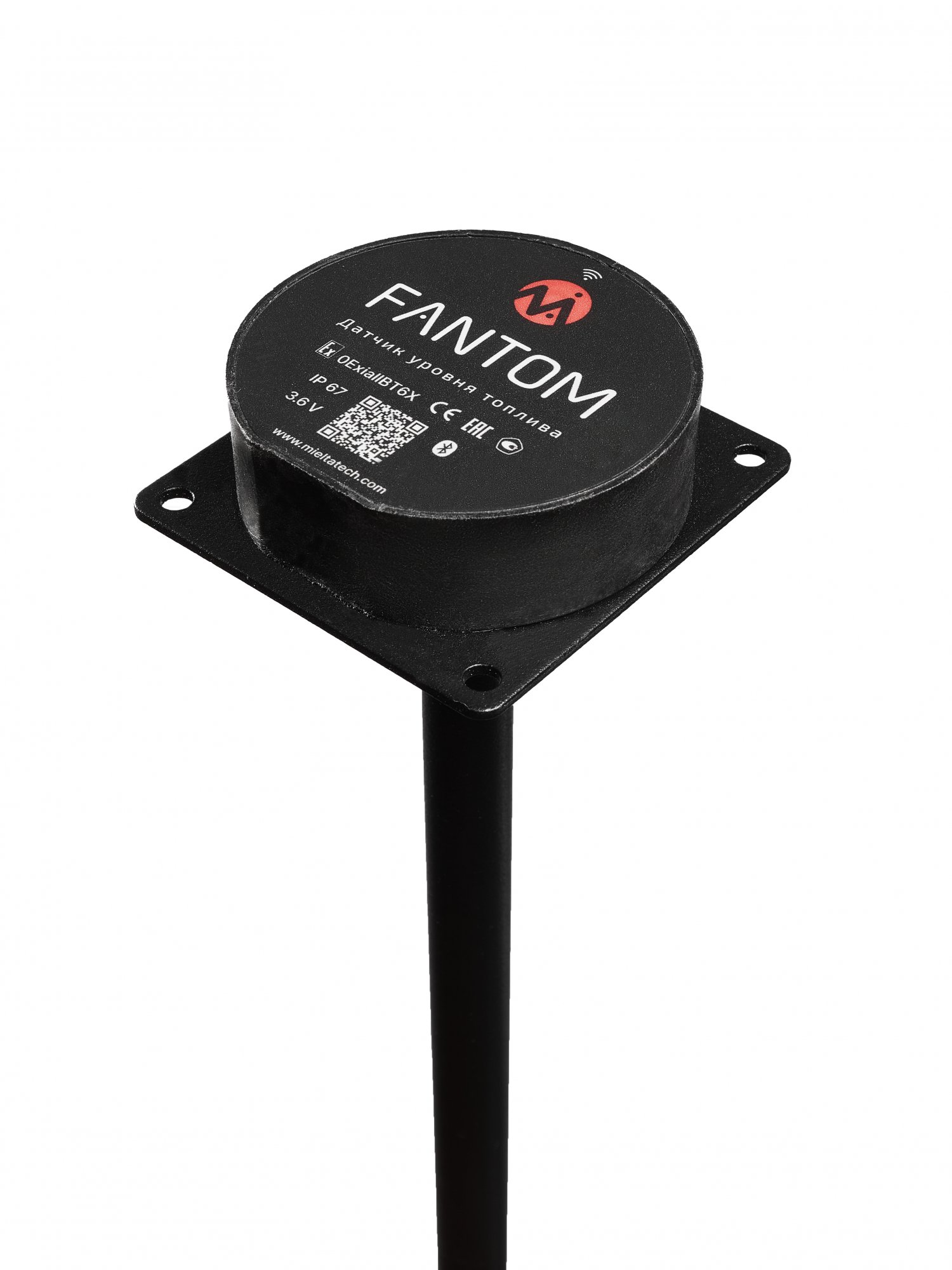
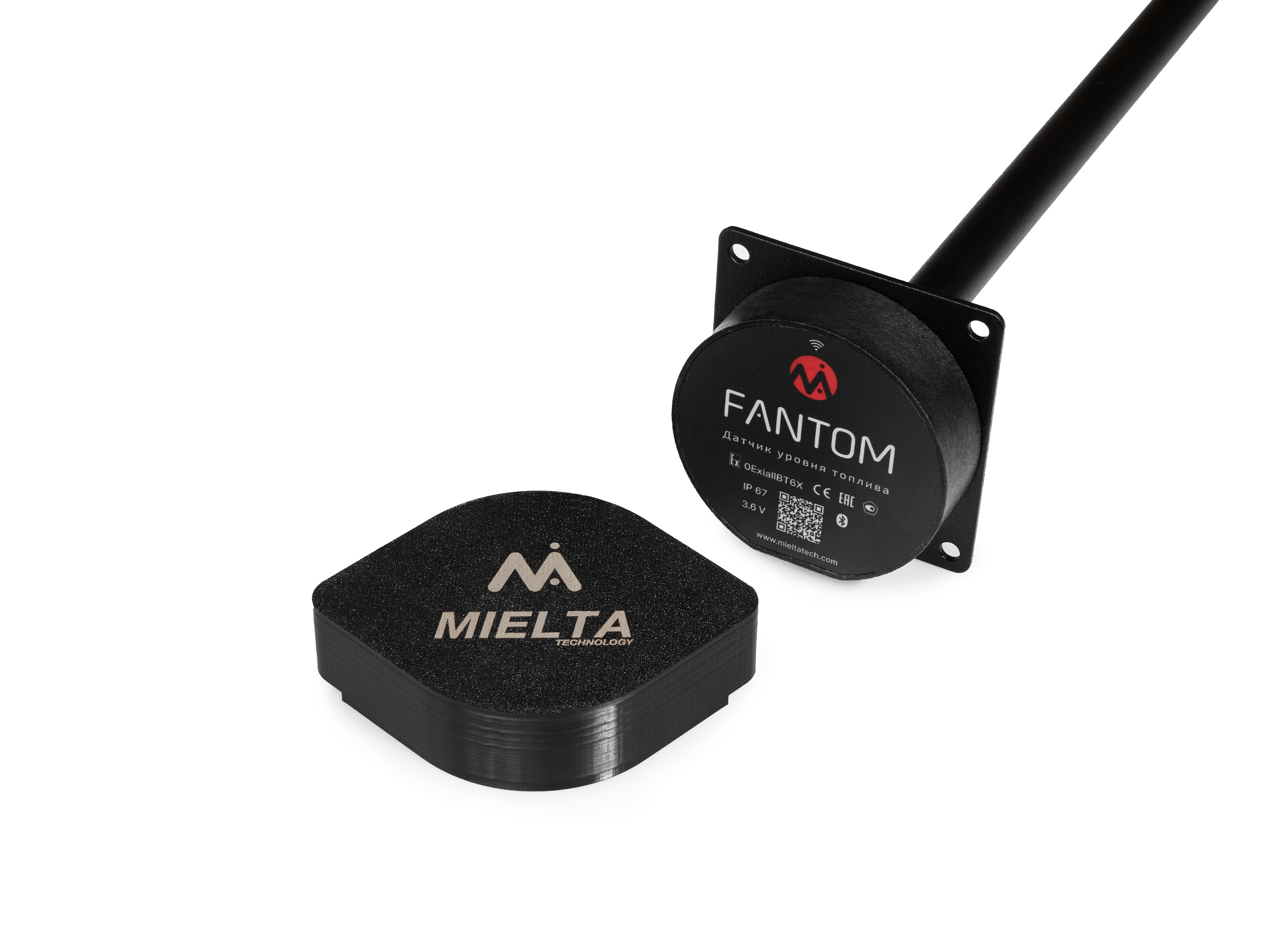
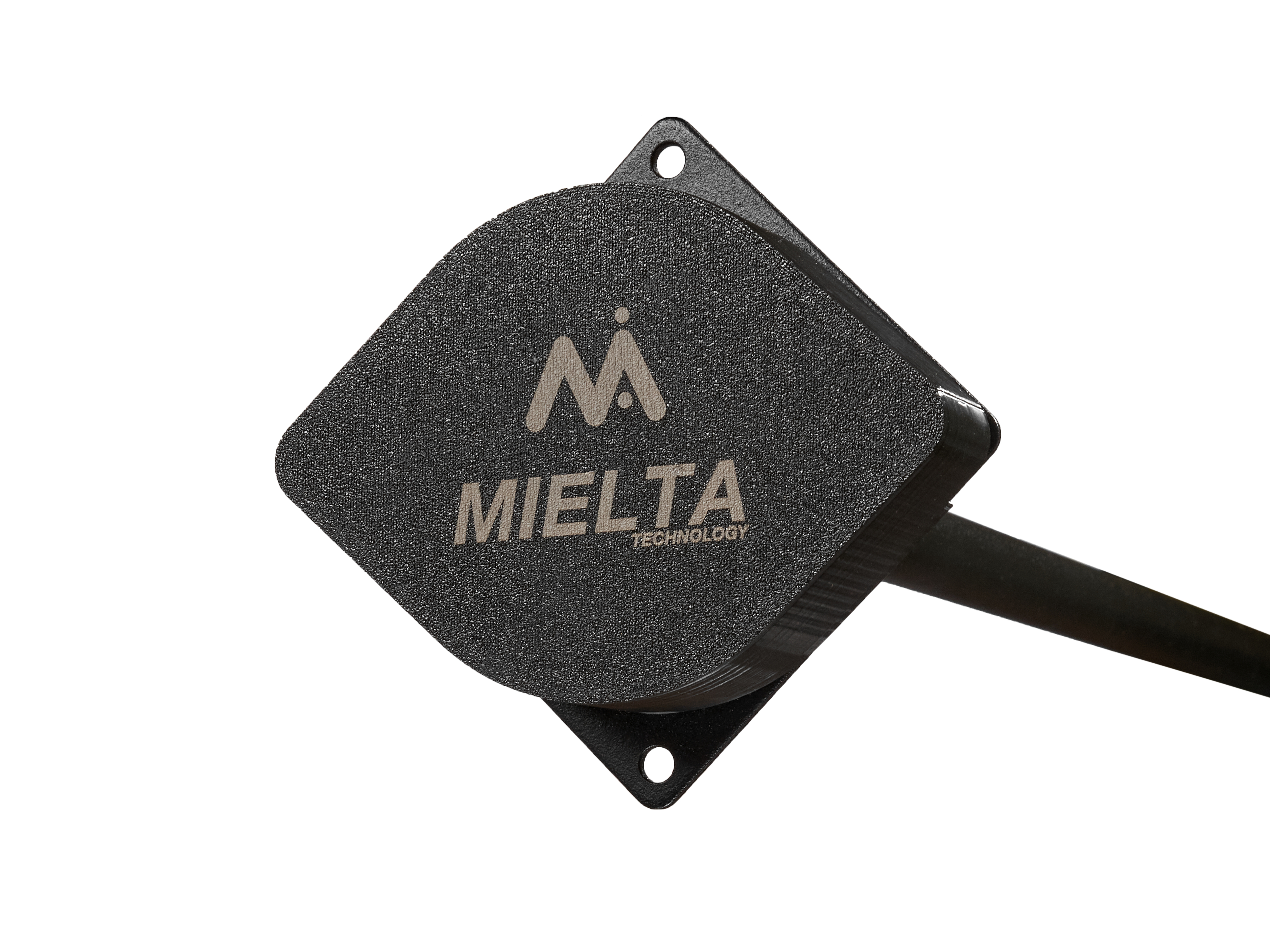
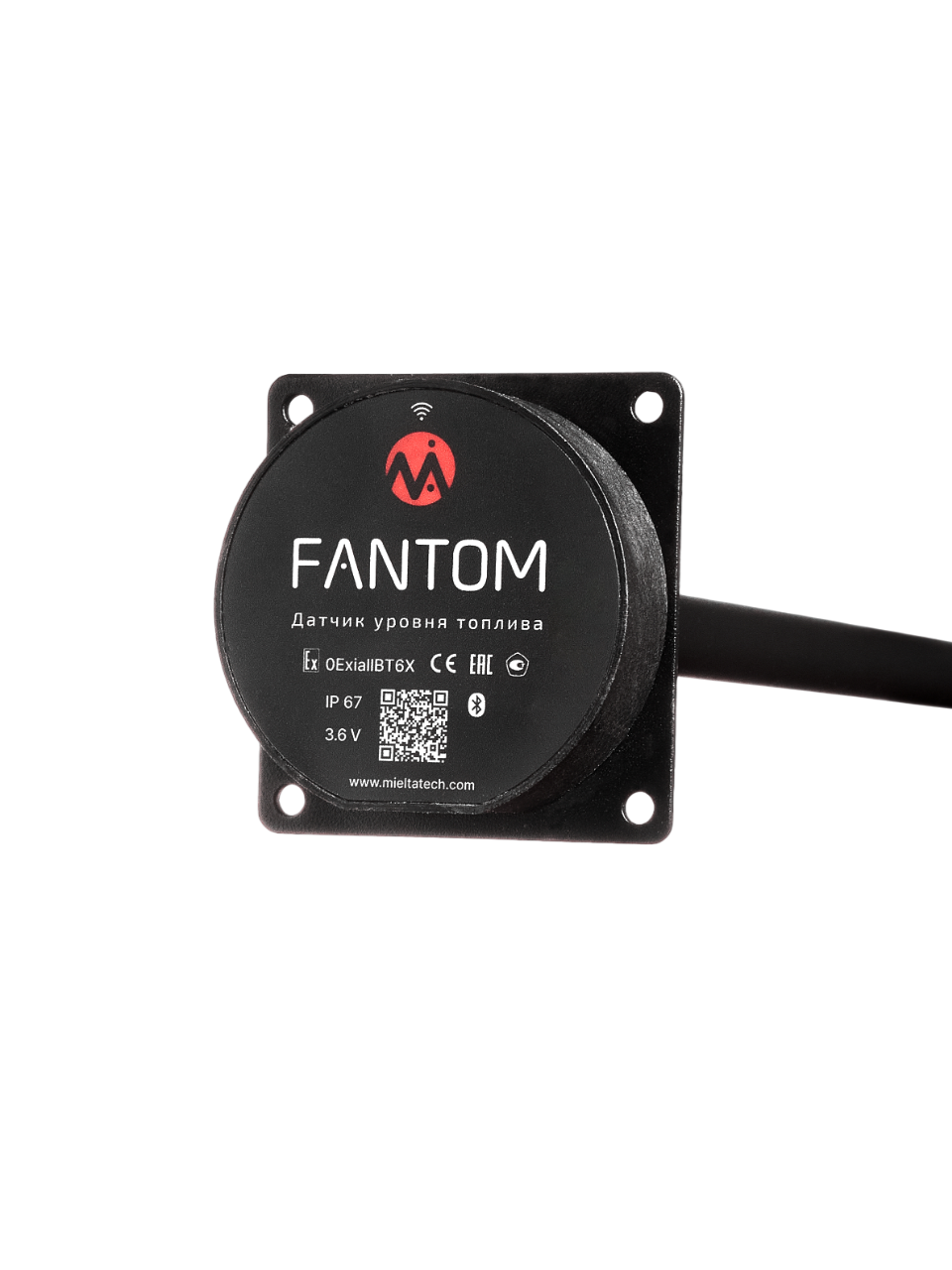


The Fantom Fuel Level Sensor (BLE) combines key satellite monitoring trends to ensure reliable and stable operation even under harsh operating conditions, including uneven terrain and unstable connectivity.
Fuel Level Sensor MIELTA® FANTOM (2025)
The updated MIELTA® FANTOM fuel level sensor is integrated with most tracker manufacturers and equipped with advanced satellite monitoring technologies, ensuring stable operation of the device even in the harshest conditions, whether on uneven terrain or with unstable connectivity. The device is designed to measure the level of light petroleum products, including diesel fuel, gasoline, kerosene, etc., in various types of tanks. The sensor can be installed both on stationary facilities and on road and railway vehicles.
-
Replaceable battery: Although BLE technology is highly energy-efficient and allows the fuel level sensor to operate for several years on a single battery, the updated MIELTA® FANTOM version allows users to replace the battery themselves once it is discharged, significantly extending the service life of the fuel level sensor.
-
High-performance ceramic antenna: Ensures stable communication with the tracker, which is critical for the accuracy of transmitted data.
-
Self-diagnostic system: Thanks to its unique integrated measurement module, the device can independently diagnose and notify the user of any operational deviations, including incorrect calibration, changes in fuel properties, or water ingress into the fuel.
-
Built-in accelerometer: The sensor is equipped with an accelerometer that detects the tilt angle of the vehicle, helping to determine the validity of fuel level data.
-
Adaptive power-saving system: The sensor consumes virtually no battery power during storage and transportation when the device is in a horizontal position.
-
Use of BLE technology (Bluetooth Low Energy): Provides high energy efficiency, enabling the device to transmit data over long distances without significant power consumption and operate for several years on a single battery.
-
Wireless technology: The sensor operates completely wirelessly, greatly simplifying installation by eliminating the need for wires and complex mounting work.
-
Smartphone configuration: Allows the user to easily configure and monitor the sensor via a smartphone app, making the control process as convenient and intuitive as possible.
Advanced Technologies and Uncompromising Reliability
Energy Efficiency and Ease of Use
Specifications:
| Parameter | Value |
|---|---|
| Battery | Li-SOCL2 3.6 V, 2.7 Ah |
| Sensor type | Capacitive, linear |
| Data transmission method | Wireless, 2.4 GHz, Bluetooth Low Energy |
| Accelerometer | Built-in |
| Sensor material | Steel |
| Measurement period | from 1 to 10 s |
| Data transmission period | from 1 to 10 s |
| Averaging interval | From 1 to 60 measurements |
| Wireless transmitter | Bluetooth Low Energy 5.0, 2.4 GHz |
| Frequency range | 2400-2483.5 MHz |
| Transmitter power | Adjustable, up to <11 dBm EIRP |
| Tilt angle sensor | Built-in accelerometer, 0-180° |
| Temperature sensor | Built-in, +/- 2°C |
| Internal memory | 4 MB |
| Wireless software update and configuration | Available |
| Enclosure protection rating according to GOST 14254–2015 | IP69k |
| Explosion protection marking | 0Ex ia IIB T6 X |
| Operating temperature | From -40 to +80 °C |
| Average service life, years | 7 |
| Mean time between failures, h, minimum | 100 000 |
| Sensitive element/probe length, mm | from 150 to 3000 |
| Enclosure dimensions | 76x80x25 mm |
Software

- Comments